马上注册,结交更多好友,享用更多功能,让你轻松玩转社区。
您需要 登录 才可以下载或查看,没有账号?注册
×
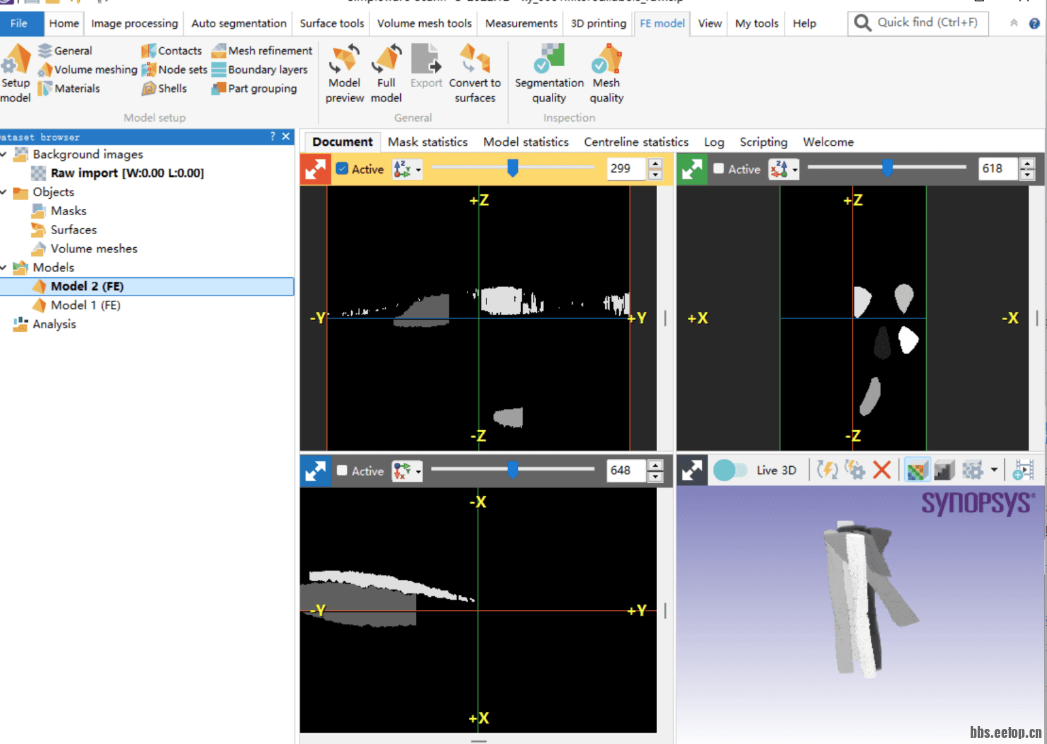 What is Simpleware 2025?
Simpleware 2025 is the latest version of the industry-leading software suite for 3D image processing and model generation. Developed by Synopsys, its primary purpose is to convert 3D scan data (from CT, MRI, micro-CT, etc.) into high-quality computational models for: It is widely used in academia, medical device manufacturing, materials science, and industrial non-destructive testing.
Key Features and Expected Enhancements in Simpleware 2025While Synopsys typically announces the full details upon release, we can anticipate significant improvements based on previous version history and current industry demands. Here’s what to expect: 1. Core Workflow and UsabilityEnhanced AI-Powered Segmentation: This will be a major focus. Expect more robust and automated tools for segmenting complex structures (like porous materials, soft tissues, or composite materials) with less manual intervention. This could include smarter "magic wand" tools, AI-based edge detection, and improved pattern recognition. Streamlined UI/UX: A continued focus on a more intuitive user interface, customizable workspaces, and faster access to frequently used tools to speed up the workflow for both new and expert users. Improved Handling of Large Datasets: As scanner resolutions increase, expect better memory management and faster processing speeds for very large (multi-gigabyte) image stacks.
2. Model Generation for Simulation (FEA/CFD)Higher-Quality Meshing: Advancements in the core algorithms for generating ready-to-solve FE/CFD meshes directly from image data. This includes better control over element quality, smoother surfaces, and more robust handling of thin or complex geometries. Multi-Material and Composite Modeling: Enhanced tools for defining and meshing interfaces between different materials, which is critical for modeling biological tissues, composites, and multi-material additive manufacturing. Direct Export to Major Solvers: Continued support and optimized export formats for all major simulation packages like Abaqus, ANSYS, COMSOL, and LS-DYNA.
3. Additive Manufacturing and 3D PrintingIntegrated Lattice Generation: More sophisticated tools for designing and incorporating lattice structures directly within the scan data context, ideal for creating lightweight or bio-mimetic implants and parts. Enhanced Support for AM File Formats: Seamless export to formats like 3MF and AMF that preserve material information and colors. Print Preparation Tools: Basic tools for checking printability, such as wall thickness analysis and overhang detection, might be more tightly integrated.
4. New Modules and IntegrationsSynopsys Cloud Integration: A strong push towards cloud-based solutions. Simpleware 2025 will likely have deeper integration with the Synopsys Cloud platform, allowing for scalable, high-performance computing (HPC) jobs like batch processing or running computationally expensive meshing tasks remotely. Expanded Python Scripting: Deeper and more comprehensive Python API, enabling greater automation, custom tool creation, and integration into digital twin and automated quality control workflows.
Core Products in the Simpleware 2025 SuiteThe suite is typically broken down into several tiered products: Simpleware ScanIP: The core module for image visualization, registration, and segmentation. Simpleware FE/CFD Module: Adds the capability to generate volume meshes for finite element and computational fluid dynamics simulations. Simpleware NURBS Module: Creates smooth, CAD-like surfaces (NURBS) from scan data for use in CAD software. Simpleware CAD Module: Allows for the integration and positioning of CAD models with the scan data. Simpleware AS Module: (Automation Server) For scripting and automating repetitive tasks in a batch-processing environment.
Who Uses Simpleware 2025?Medical Device Researchers: Designing and validating orthopedic implants, stents, and surgical guides. Biomedical Engineers: Creating patient-specific models for surgical planning and computational biomechanics. Materials Scientists: Analyzing the internal microstructure of materials (metals, composites, foams) to predict their macroscopic properties. Industrial Engineers: Performing non-destructive failure analysis, reverse engineering, and creating digital twins of physical components.
How to Get It and Learn MoreFree Trial: Synopsys often provides free trial versions for qualified users. Training & Webinars: Look for official Synopsys training courses and webinars, which are excellent for learning about new features and best practices.
In summary, Simpleware 2025 represents the continued evolution of a powerful platform, focusing on AI-driven automation, cloud connectivity, and delivering highly accurate models for the most demanding engineering and research applications.
|
 /1
/1 

 eetop公众号
 创芯大讲堂
创芯大讲堂 创芯人才网
创芯人才网

 IP卡
IP卡 狗仔卡
狗仔卡 发表于
发表于  提升卡
提升卡 沉默卡
沉默卡 喧嚣卡
喧嚣卡 变色卡
变色卡 创芯人才网
创芯人才网